To prevent ice dams, keep the roof as cold as the air above it. That work happens in the attic: seal the air leaks from the house, add insulation, and vent the attic once the leaks are closed. Ice dams form when heat from the house melts snow on the upper roof and the water freezes again at the cold eave. Clogged gutters don't cause them, though a gutter packed with leaves and ice makes a dam worse.
We clean gutters, so the gutter is our part of this. The attic and the roof belong to other trades, and near the end of this post there's a table of who to call for each fix.
How an ice dam forms
An ice dam is a ridge of ice along the edge of a roof that holds back meltwater. Building Science Corporation's digest on ice dams puts the cause in one line: the upper part of the roof is warmer than the lower edge. Snow over a warm patch of roof melts, the water runs down the slope, and it freezes again when it reaches the eave, which hangs out past the wall with cold air under it.
North Dakota State University Extension lists the conditions that set one up: snow on the roof, heat being lost through it, and outdoor temperatures just below freezing. As the ridge grows, water pools behind it and works under the shingles. NDSU names the results as water stains on the ceiling, structural damage and mold. University of Missouri Extension adds dislodged shingles and sagging gutters.
The digest names three common sources of the warm patch: air leaking from the house into the space under the roof, a heat source in the attic such as a poorly insulated duct, and uneven snow depth combined with sun. A homeowner can fix the first two.
Why Michigan roofs get them
Snow is the fuel. NOAA's 1991–2020 normals put Detroit Metro Airport at 45 inches of snow a year, with 14 inches in January alone. The station in White Lake Township averages 62.3 inches, and our Commerce Township gutter page covers what that extra snow means next door.
The cold matters too. Detroit Metro averages about 42 days a year when the high never climbs above freezing, and those are the days NDSU describes, with snow sitting on a roof that's losing heat.
Older houses with shallow eaves are where ice dams show up around here. Our Northville gutter page notes that much of the city's housing predates modern attic insulation and ventilation. Our Livonia gutter page covers the postwar ranch: low pitch, a short eave and older attic insulation, which together make an ice dam easy.
How to prevent ice dams on your roof
The order matters. ENERGY STAR says to finish attic air sealing before you add insulation, and adds that the two together help stop ice dams. MSU Extension puts the fix in the same place: better insulation and air sealing in the attic, together. Ventilation comes last, for a reason covered in step three.
1. Seal the air leaks into the attic
Building Science Corporation ranks air leakage as the top problem to solve. The leaks sit wherever something passes through the ceiling: plumbing stacks, wiring, recessed lights, chimneys and flues, and the attic hatch. Look for dirty patches in the insulation, which ENERGY STAR says show where air has been moving through it.
Small gaps take caulk or canned foam. The gap around a metal flue takes metal flashing and high-temperature caulk, and ENERGY STAR says never to use spray foam there. ENERGY STAR also calls attic air sealing a challenging DIY project and lists reasons to bring in a professional: rotted or moldy framing, bath or dryer vents that empty into the attic, knob-and-tube wiring, and vermiculite insulation, which may contain asbestos. If the house has gas or oil appliances, it recommends having them tested for proper drafting before and after sealing.
2. Bring the insulation up to depth
Wayne and Oakland counties sit in climate zone 5, according to the Department of Energy's county guide. For that zone, ENERGY STAR recommends R60 in an uninsulated attic, or R49 where 3–4 inches are already down. NDSU Extension says it in inches: northern attics need about 15 inches of blown-in insulation, around R-50.
Pay attention to the edges. The digest notes that insulation runs thin where the roof framing meets the outside wall, which is the spot right above the eave where a dam starts.
3. Vent the attic once the leaks are sealed
Ventilation carries off the small amount of heat that gets past good insulation. NDSU recommends soffit and ridge vents or gable vents, with baffles that hold the insulation back from the soffit vents so air can move. The digest warns that adding vents before sealing the leaks can make the problem worse, because the vents give the leaking warm air an easier path out. Ventilation can't make up for big leaks or thin insulation.
4. Get heat sources out of the attic
Ductwork and hot-water piping that run above the insulation heat the attic from inside, the digest says, and need heavy insulation or a new route. ENERGY STAR lists kitchen, bath and dryer vents that exhaust into the attic as a job for a professional.
5. Protect the eave at the next roof job
Sun can melt snow on the upper slope of a well-built roof, so the digest recommends a self-sealing waterproof membrane at the eaves of every sloped roof as backup. It goes under the shingles, which makes it a question for your roofer the next time the roof is replaced.
When there's already snow on the roof
These steps buy time. None of them fixes the cause.
Rake the lower roof from the ground. NDSU says pulling snow off the bottom of the roof cuts down ice dams and icicles. Use a roof rake so you stay off the roof, and keep clear of overhead power lines.
Cut a channel in an emergency. Missouri Extension describes running warm tap water through the dam from the lower edge up, and says the channel stops working within days. InterNACHI, the home inspectors' association, saves this for emergencies when water is already coming inside.
Leave the hammer in the garage. InterNACHI warns that shovels, hammers and ice picks damage the roof, and people slip off icy roofs doing it.
Know what heat cable does. NDSU says homeowners treat the symptom with heat tape. InterNACHI says heat cables rarely work, use electricity and can make shingles brittle.
If water is already coming through a ceiling, call a roofing company that removes ice dams.
What gutters have to do with it
Gutters don't cause ice dams. InterNACHI says so directly, and adds that gutters concentrate the ice in a spot where parts of the house can peel away under its weight. Taking them down leaves the cause in place, and the roof water then lands at the foundation.
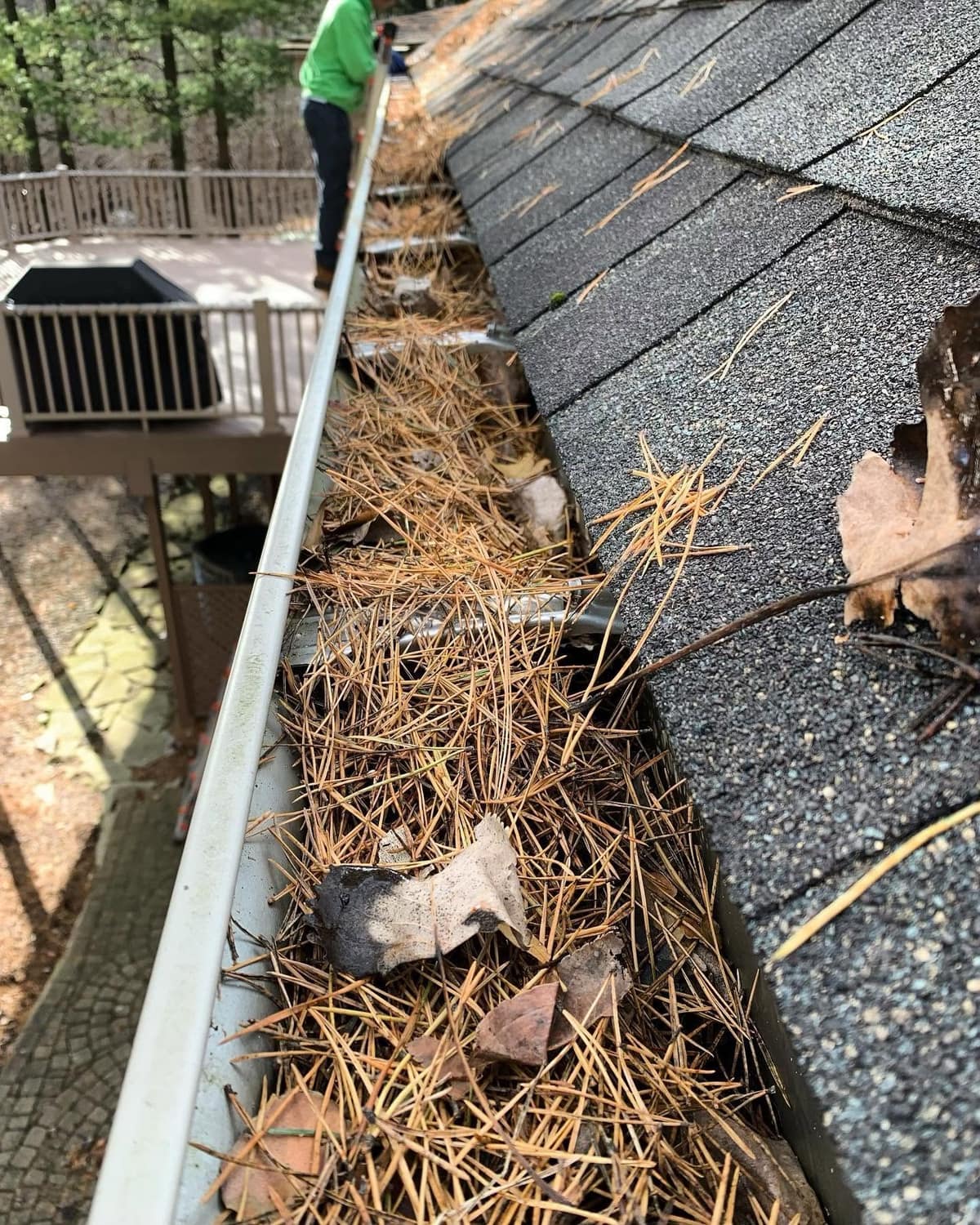
A clogged gutter does make a dam worse. Wet leaves packed in the trough freeze into a block at the edge, which gives the ice a base to build on and holds meltwater against the shingles. A frozen downspout takes away the water's last way out.
That's the piece we handle. Our fall gutter cleaning goes in after the oaks finish and before the first hard freeze, and the fall booking post covers the timing. Every gutter is cleared by hand, every downspout is flushed and checked running clear at the bottom, and the debris is bagged and hauled away. We look at the hangers, the fascia and the slope while we're up there and tell you what we saw. If you get ice dams every winter, our gutter cleaning page gives the same advice as this post: put the money into an insulation and ventilation check first.
Who to call for each fix
The problem | Who handles it |
|---|---|
Air leaks and thin insulation in the attic | An energy auditor or insulation contractor. ENERGY STAR suggests asking your utility about rebates on an energy assessment |
Attic vents and baffles | A roofer or insulation contractor |
Bath, kitchen or dryer vents that empty into the attic | A contractor who works on exhaust ducts |
A membrane at the eaves, or leaks at the ceiling | A roofer |
Heat cable | A roofer or electrician who installs it |
An ice dam on the roof right now | A roofing company that removes ice dams |
Leaves in the gutters before the freeze | Us, with a fall gutter cleaning |
Questions people ask
Do heat cables stop ice dams?
No. Heat cable works on the ice at the edge of the roof and leaves the cause alone, which is heat leaking into the attic. North Dakota State University Extension calls heat tape a way of treating the symptom. InterNACHI, the home inspectors' association, says heat cables rarely work, use electricity and can make shingles brittle.
Should I chip an ice dam off the roof?
No. Hammers, picks and shovels damage shingles, and an icy roof is an easy place to fall. InterNACHI warns against both. Pull the bottom few feet of snow off with a roof rake from the ground, keep clear of power lines, and call a roofing company that removes ice dams if water is coming in.
Will taking my gutters off stop ice dams?
No. Gutters don't cause ice dams, so taking them off leaves the cause in place, which is heat leaking into the attic. Without gutters, the water off the roof lands against the foundation. Keep the gutters, clear them before the freeze, and spend the money on sealing and insulating the attic.
Are icicles a sign of an ice dam?
They can be. University of Missouri Extension calls icicles hanging from the roof overhang a warning sign of ice dams. Check inside the house too. A water stain on a ceiling or an outside wall near the eave means meltwater is getting under the shingles, and that calls for a roofer.
Get a quote
Send your address through Get a Free Quote and tell us which trees hang over the roof. We'll quote the fall gutter cleaning and schedule it for the gap after the leaves are down and before the freeze. Gutter cleaning runs April through November.