Driveway cleaning in Metro Detroit is a spring job first. A winter of road salt leaves a gray film on the concrete and tire marks at the garage, and on older slabs it leaves a surface that has started to flake. We pressure wash concrete driveways, walks and patios with a surface cleaner from April through November, and we pre-treat oil, rust and leaf stains before the wash. Fresh stains come up well. Oil that has soaked deep can fade and leave a shadow, and concrete that has already flaked stays flaked.
What salt and freeze-thaw do to concrete
Concrete has fine pores in its cement paste, and water works its way into them. When that water freezes, it expands by about 9 percent, according to the American Concrete Institute. Air-entrained concrete has tiny air bubbles mixed in to give that ice room to expand, and ACI says the same bubbles hold down the scaling caused by chemicals spread to melt ice.
Michigan winters test that over and over. In Detroit's 1991 to 2020 normals from the National Weather Service, every month from December through March has an average high above freezing and an average low below it. January, the coldest month, averages a high of 32.3 degrees and a low of 19.2. Snow and brine melt on the slab in the afternoon and freeze inside it again overnight.
Salt adds to the wear. MSU Extension's comparison of winter deicers lists rock salt as damaging to concrete and notes that every deicer has some potential to harm concrete and plants. Drainage plays a part too. ACI explains that deicing solutions left ponded on concrete can soak in and cause deterioration, and water trapped on the surface can crack or spall the concrete when it freezes. A low spot that holds slush is the place to watch.
The damage has a name: scaling. The top layer comes loose in thin flakes and the stones underneath start to show. You'll see it on driveways, porch steps and the end of the walk where slush melts off the car.
What a spring wash does for salted concrete
A spring wash takes off the salt film and the winter grime. Left alone, that film stays on the concrete, and washing it off each year helps a driveway last.
Timing matters. The National Weather Service puts Detroit's average last spring freeze at April 22, and washing after it lowers the odds that water left in the slab freezes overnight. Our washing season runs April through November, and late April into May is when the winter salt comes off.
A wash won't repair scaling. If the top of your slab is already flaking, full pressure makes it rougher. We'll tell you that before we start, and if you still want it cleaned, we wash it at low pressure to take off the film and the growth. It comes out cleaner. It won't look new.
How a surface cleaner cleans a driveway
A hand wand cleans a narrow strip at high pressure, and the passes never overlap evenly. That's where the light and dark stripes on some driveways come from. They don't wash out, because the wand changed the texture of the concrete itself.
We run a surface cleaner over the open concrete. It's a covered, spinning bar with two nozzles that keeps the pressure even across its whole width, so it leaves no stripes. Then the edges, the expansion joints and the steps get cleaned by hand at lower pressure. Tire marks and road film at the garage come off with the same pass, because there's nothing alive in them to grow back.
Oil, rust and leaf stains
Stains are where concrete cleaning gets less predictable. The American Cement Association, formerly the Portland Cement Association, says to match the method to the stain. A degreaser may work on an oil stain, an acid-based cleaner may lift rust, and a stain that has soaked in may need sandblasting or grinding. We pre-treat oil, rust and leaf stains before the wash, and we'll tell you what to expect before we start.
Stain | What it is | What to expect |
|---|---|---|
Fresh oil drip | Motor oil still near the surface | A degreaser and the wash lift it well |
Old oil spot | Oil that has soaked in over years | It lightens, and a shadow can stay |
Rust | Iron from furniture legs, metal planters or tools | An acid-based treatment can lift it |
Leaf stain | Brown tannin from wet oak and maple leaves | It needs its own treatment, and newer stains fade faster |
Tire marks | Rubber and road film at the garage | The surface cleaner takes them off |
Salt film | Dried brine from the road and the car | It comes off with the wash |
Leaf stains are the ones to plan around. Wet maple and oak leaves left on a patio or a walk for a few weeks leave a brown mark that gets harder to remove the longer it sits. Sweeping the leaves off your concrete in the fall saves a lot of work in the spring.
Pavers and joint sand
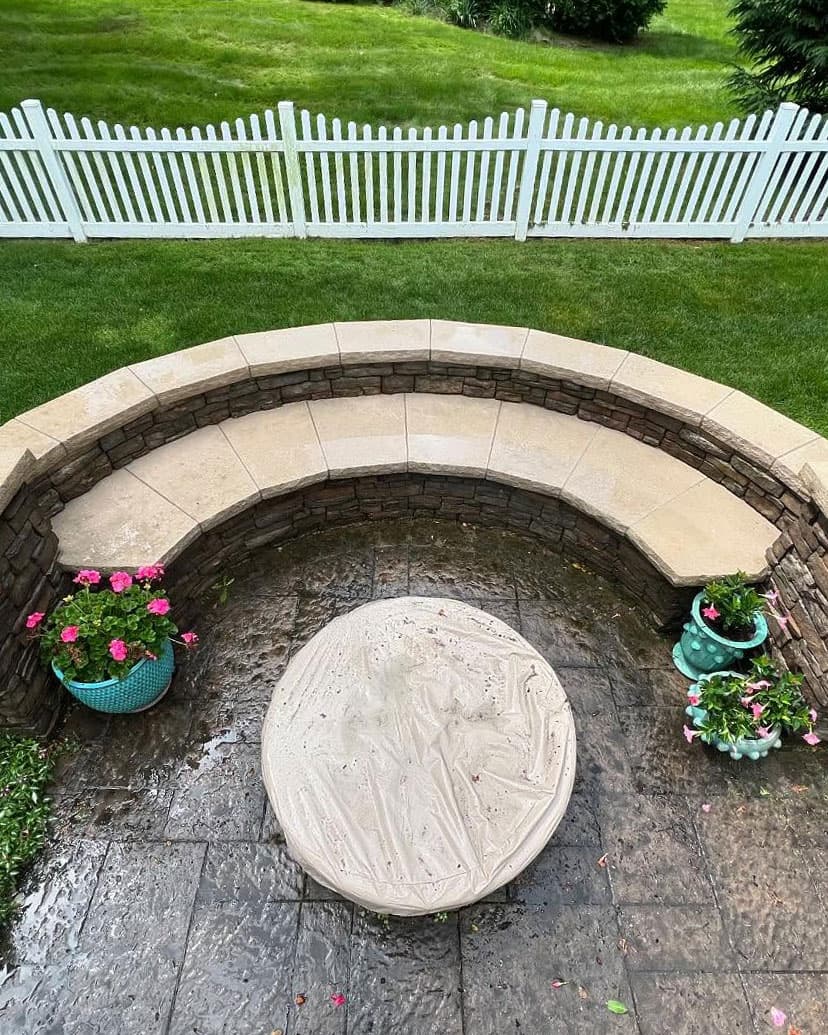
Pavers need a lighter touch. The sand in the joints holds each paver in place, and pressure aimed into those joints blows it out. Once the sand is gone, the pavers shift and weeds come up through the gaps. We clean paver walks and patios at reduced pressure to leave the sand where it is. If the joints have already washed out, we'll tell you they need re-sanding. Paver patios and walks are common around Plymouth, and our Plymouth pressure washing page covers them.
Stamped and colored concrete is the other surface to slow down on. Its color and its sealer sit in the top layer, and a hard pass takes both off in a pattern you can't unsee. We clean it at reduced pressure, and if the sealer is already worn through, we'll say so. Stamped patios were popular when Novi's 2000s subdivisions went up, and our Novi pressure washing page goes into them.
Sealing after the wash
A sealer is worth thinking about once the concrete is clean. The American Cement Association notes that sealers and coatings can repel corrosive substances, and road salt is the one a Michigan driveway sees all winter.
A sealer has to go on clean concrete, so the wash comes first. The product label will say how long the slab needs to dry before it goes on and how often to recoat. Stamped concrete already carries a sealer from the day it was poured, and that coat wears with traffic and weather. After we wash a stamped patio, we'll tell you if it looks ready for a fresh coat.
If your driveway is new, keep the salt off for now. MSU Extension's deicer guidance says not to use deicers on concrete that hasn't fully cured.
When to book driveway cleaning
Two times work well here. Late April into May clears the winter salt once the overnight freezes are done. Late September into October takes off the summer's growth and gets the patio clean before the leaves come down.
Concrete is priced by square footage and condition, since oil, rust and leaf stains need pre-treatment first. Siding gets a different method from concrete, and if the house is due too, both can go on the same visit. Our post on pressure washing vs soft washing explains why each surface gets its own.
Canton is a good example of how much concrete a house can have. Wide drives, garage aprons, walks and patios sit on flat clay that drains slowly, and our Canton pressure washing page covers what a long salt season does to them. The full service is on our pressure washing page, and every town we cover is on the pressure washing service areas page.
Questions people ask
Can pressure washing get oil stains out of a driveway?
Fresh oil comes up well with a degreaser worked in before the wash, and we pre-treat every oil spot we quote. Oil that has soaked in for years can lighten and still leave a shadow, because it sits below the layer a wash reaches. We look at the stains first and tell you what to expect.
How often should a concrete driveway be cleaned in Michigan?
Once a year, in spring, suits a driveway that takes winter salt. Late April into May, after the last overnight freeze, clears the brine before summer and leaves less of it on the slab. A patio under trees can use a second wash in early fall, before wet leaves stain it.
Should I seal my driveway after it's cleaned?
A sealer helps keep salt and water out, and it has to go on clean concrete, so the wash comes first. Follow the sealer maker's directions for drying time and recoating. Stamped and colored concrete already carries a sealer that wears over time, and we'll tell you if yours looks ready for a fresh coat.
Will pressure washing pavers wash out the joint sand?
It can if the pressure is aimed into the joints, which is why we clean pavers at reduced pressure. The sand holds the pavers in place, and once it washes out they shift and weeds come through. If your joints are already empty, we'll tell you so you can have them re-sanded after the wash.
Get a quote
Send your address, a rough size for the driveway, walks and patio, and a photo of any stains through Get a Free Quote. We're owner-operated in Northville and have been since 2014, and we'll quote the concrete on its own or with the house.